Missing Tea on the Sea
MUHAMMED NOUSHAD

Over the years, when you make multiple voyages, it’s highly likely that you develop a peculiar penchant for ships. They turn out to be something more than vehicles or modes of transportation. Every time I board a ship, despite the discomforts and uncertainties, I feel a strange sense of belonging. A sort of homecoming. I must confess that it’s not about the vessel itself, but more about the sea, its vastness and depth, in every sense of those words. And more importantly, about the sea people who teach you how to love and live primordially: the soulful islanders of very dear Lakshadweep.
When you are on a ship, you cannot miss the overarching, overbearing presence of the sea: omnipresent, omniscient in mysterious ways, and even omnipotent – if you have watched those shipwreck movies. You’re swimming in a pool of calming contemplations, memories, dreams, and fears. The most perfect solitudes I have known in my life have been on decks, especially at night. The waves talk to you in a language that you have never heard before.
In such soothing solitude, if you are a tea lover, you crave a cup of tea. Having endless cups at your disposal is your wildest fantasy. And that’s where the trouble of sailing lies, for a tea fundamentalist. Tea is a rarity, almost a ration sort of thing, available only during stipulated canteen timings, at least on the ships that sail to and fro across the Lakshadweep archipelago.
Ship canteens have strict schedules. If you are addicted to tea, especially in the evenings, you are at high risk on the high seas. Left with no choice, you wait for the canteen or tea shop to open for half an hour, typically between 4:00 and 4:30 pm. After that, absolutely no chance to get tea or anything to drink or eat until the door opens for dinner. Fortunately, they serve dinner early, as passengers sleep early on ships, as there is nothing else to do at night.
Bunk class and cabin class have distinct canteens, with separate kitchens and menus. But you can see chapatis and other edibles being exchanged from one to the other, if supplies are exhausted.
The saddest part is that the liquid they claim to be selling as tea is a distant relative of an actual good-quality tea. Still, something is better than nothing. And as a universal rule, a feeble black tea is more respectful than a miserable milk tea.
You always miss good tea on the sea.
But even bad tea is a luxury in ships, you gradually realise, with gratitude. Also, imagine the self-contempt you face after accidentally missing the canteen timings: probably you overslept or overindulged in a movie or somehow didn’t know this particular ship’s particular tea schedules. Alas!
If you were traveling by road, you could spot a nice café somewhere. On trains, you wait for a reliable platform vendor to appear. On flights, overpriced tea could be bought anytime. But on a ship, you are left with a single option: wait till the shop opens. Of course, you can’t expect a tea shop in the middle of the ocean. At times, I fantasised about that magical realist tea shop rising in the middle of the sea, as if in a dream, perhaps on top of a sea rock, like in an animation movie. Later, having experienced the pang of missing tea, I started buying cold coffee to quench my addictive appetite for the tea/coffee genre, at times tinged with guilt at the privilege.
Tea and sea are such a humbling combination, an indescribable blessing if you love them both. A few years ago, in the summer of 2021, my local friends in Kavarathi invited me on a fishing trip to the outer sea in a small, open boat. We set off early, even before the tea shops were open. As the boat crossed the lagoon and left the strip of the island far behind, the sun rose slowly in the background. To my grateful surprise, my friends Yaseen and Saleem started making tea, using a small stove they called “shudtham” in their local tongue of Jasari.
I remember it was good tea, a reassuring gesture of care. Even if its taste may fade from memory, I will always cherish the warmth of that simple act, that beautiful morning when sunlight slowly blessed us through the clouds, and tea was shared in a moving boat on the sea. The islanders never cease to surprise you with their genuine love and heart-warming hospitality.
Just like the sea, tea also contains a route to the soul, through meditation, and Zen Buddhism has developed a whole set of ritualism around it. Even in the most profane settings, a good cup of tea can make you miss your dear ones; it can almost remind you of a better possibility of being. The sea does the same thing more intensely and intimately. And the tea made on the sea humbles you; it fills your heart.
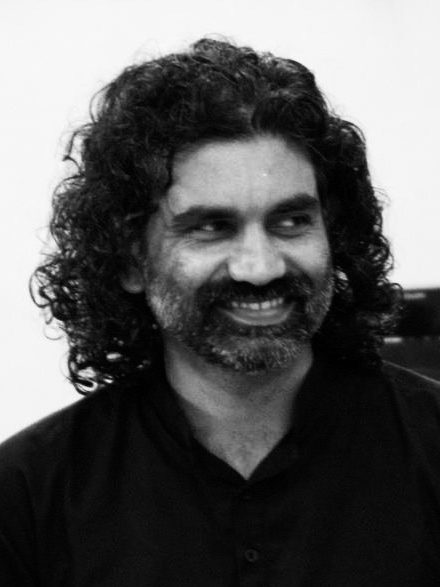
Muhammed Noushad is a writer, media educator and (un)learning facilitator.
He also serves as an editor, translator and documentary filmmaker. He facilitates intense training workshops in Creative Writing, Script Writing and Documentary Making, in India and abroad.
He loves traveling and writing about people’s deep values. He lives in Ramanattukara, Kozhikode.
Illustration done by Annabel Fathima.


 themarinadejournal.com